Open Ocean Research
Open Ocean Research
- Natal homing and trans-Atlantic mixing of bluefin tuna
- Consequences of DWHOS: Pelagic recruitment (epipelagic)
- Connectivity of deep-pelagic fishes using otolith chemistry
- Movement and stock structure of Atlantic blue marlin
- Vertical and horizontal habitat use of yellowfin tuna
- Nursery origin of yellowfin and bigeye tuna in the Hawaiian Islands
- Distribution and habitat associations of billfish and swordfish larvae across mesoscale oceanographic features
Pelagic Fisheries Conservation Program (PFCP)
Mission:
 The goal of PFCP is to foster interdisciplinary research on pelagic fishes that will be used to conserve biodiversity and maintain pelagic fish stocks in the Atlantic and Pacific, with a special emphasis on fishes in the Gulf of Mexico. Dr. Jay Rooker is the Director of PFCP and his team works with scientists from several institutions on a variety of research projects.
Natal homing and trans-Atlantic mixing of bluefin tuna
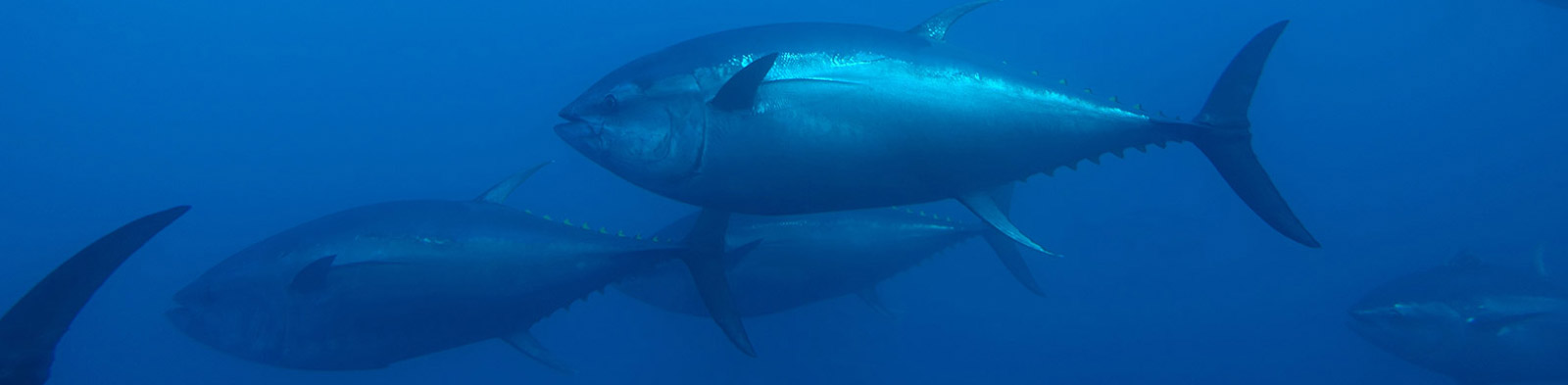
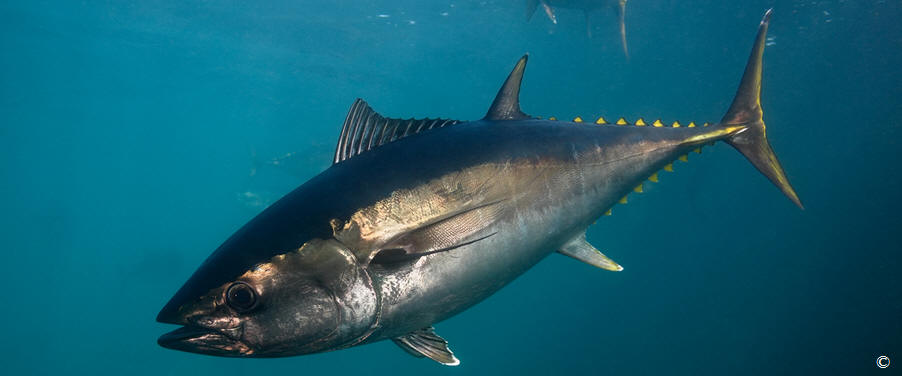
Atlantic bluefin tuna populations are in steep decline, and an improved understanding of connectivity between individuals from eastern (Mediterranean Sea) and western (Gulf of Mexico) spawning areas is needed to manage remaining fisheries. Chemical signatures in the otoliths of yearlings from regional nurseries are distinct and serve as natural tags for us to assess natal homing and mixing. Recent results indicated that adult bluefin tuna show high rates of natal homing to both eastern and western spawning areas. Trans-Atlantic movement (east to west) is also significant and size-dependent, with individuals of Mediterranean origin mixing with the western population in the U.S. Atlantic. The largest (oldest) bluefin tuna collected near the northern extent of their range in North American waters appear to be almost exclusively of western origin, indicating that this region represents critical habitat for the western population.
Funding: NOAA Fisheries, ICCAT
Associated Publications
Rooker JR, Wells RJD, Block BA, Liu H, Baumann H, Chiang WC, Zapp Sluis M, Miller NR, Mohan JA, Ohshimo S, Tanaka Y, Dance MA, Dewar H, Snodgrass OE, Shiao JC (2021) Natal origin and age-specific egress of Pacific bluefin tuna from coastal nurseries revealed with geochemical markers. Scientific Reports 11: 14216. doi:10.1038/s41598-021-93298-2
Rooker JR, Arrizabalaga H, Fraile I, Secor DH, Dettman DL, Abid N, Addis P, Deguara S, Karakulak FS, Kimoto A, Sakai O, Macías D, Santos MN (2014) Crossing the line: migratory and homing behaviors of Atlantic bluefin tuna, Marine Ecology Progress Series 504: 265-276. doi:10.3354/meps10781
Schloesser RW, Neilson JD, Secor DH, Rooker JR (2010) Natal origin of Atlantic bluefin tuna (Thunnus thynnus) from the Gulf of St. Lawrence based on δ13C and δ18O in otoliths. Canadian Journal of Fisheries and Aquatic Sciences 67: 563-569. doi:10.1139/F10-005
Rooker JR, Secor DH, DeMetrio G, Schloesser R*, Block BA, Neilson JD (2008) Natal homing and connectivity in Atlantic bluefin tuna populations. Science 322: 742-744. doi:10.1126/science.1161473
Rooker JR, Secor DH, DeMetrio G, Kaufman, JA, Belmonte Rios A, Ticina A (2008) Evidence of trans-Atlantic mixing and natal homing of bluefin tuna. Marine Ecology Progress Series 368: 231-239. doi:10.3354/meps07602
Consequences of DWHOS: Pelagic recruitment (epipelagic)
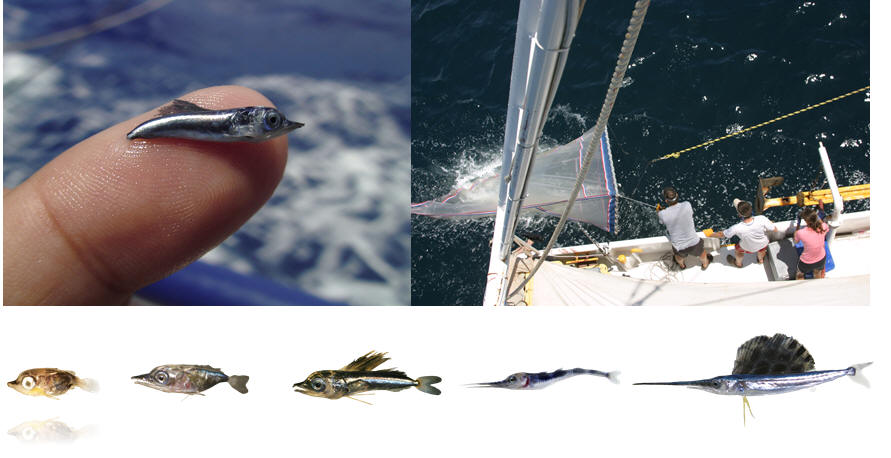
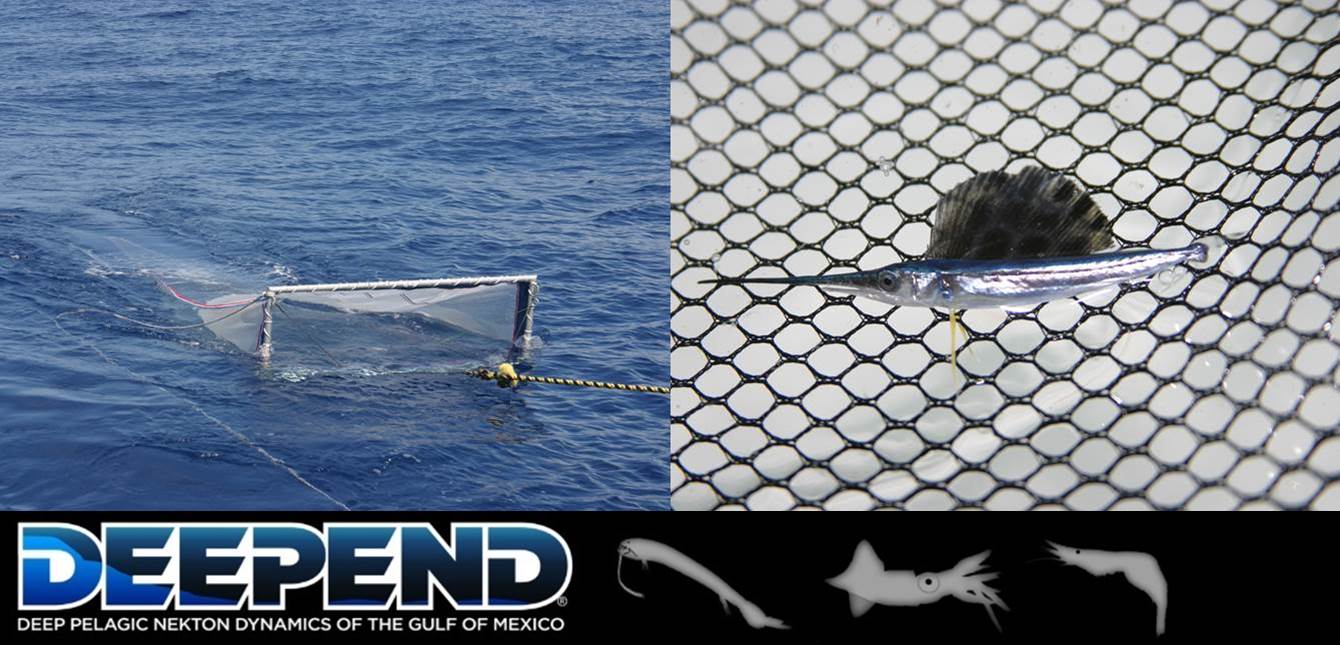
Shelf and slope waters in the DWHOS area are known to serve as critical spawning, nursery, and foraging habitat of several important oceanic species including billfishes, tunas, and other pelagic taxa (swordfish, dolphinfishes)-based on ichthyoplankton surveys by DEEPEND investigators. The aim of this component is to investigate potential ecological effects of the DWHOS on pelagic fishes during the early life period. We will contrast catch data of larvae and early juveniles before (2006-2009) during (2010), and after (2015-2017 ~ DEEPEND) the DWHOS to improve our understanding of the causes of temporal variability as it relates to the DWHOS. Generalized additive models (GAMs) will be developed for periods before to characterize habitat associations and create habitat suitability models for assessing potential impacts. In addition, life history and ecosystem parameters that favor the production and survival of pelagic fish larvae collected from 2015 to 2017 will be compared to estimates before (baseline) and after the DWHOS. Ichthyoplankton surveys will be conducted in shelf and slope waters of the NGoM (same location as pre-spill baseline ~ 92-88 W longitude and 27-28 N, and fish larvae and juveniles will be collected from epipelagic waters with two net gears: neuston tows at surface and oblique bongo tows to ~200 m. A suite of environmental parameters will be measured at sea or extracted from remotely sensed/archived datasets to characterize nursery habitats or associations (using GAMs) of selected taxa. After all species are identified (visual or genetic), length and weight of each will be measured, and stomachs will be extracted, weighed, and individual prey items identified to assess potential changes in prey availability. Apart from basic catch numbers, life fitness or life history traits (condition, growth, mortality) and ecosystem health proxies (assemblage biomass and biodiversity) will be determined using baseline and DEEPEND samples.
Funding: GOMRI
Associated Publications
Rooker JR, Kitchens LL, Dance MA, Wells RJD, Falterman B, Cornic M (2013) Spatial, temporal, and habitat-related variation in abundance of pelagic fishes in the Gulf of Mexico: potential implications of Deepwater Horizon oil spill. PLoS ONE 8(10): e76080. doi:10.1371/journal.pone.0076080
Connectivity of deep-pelagic fishes using otolith chemistry
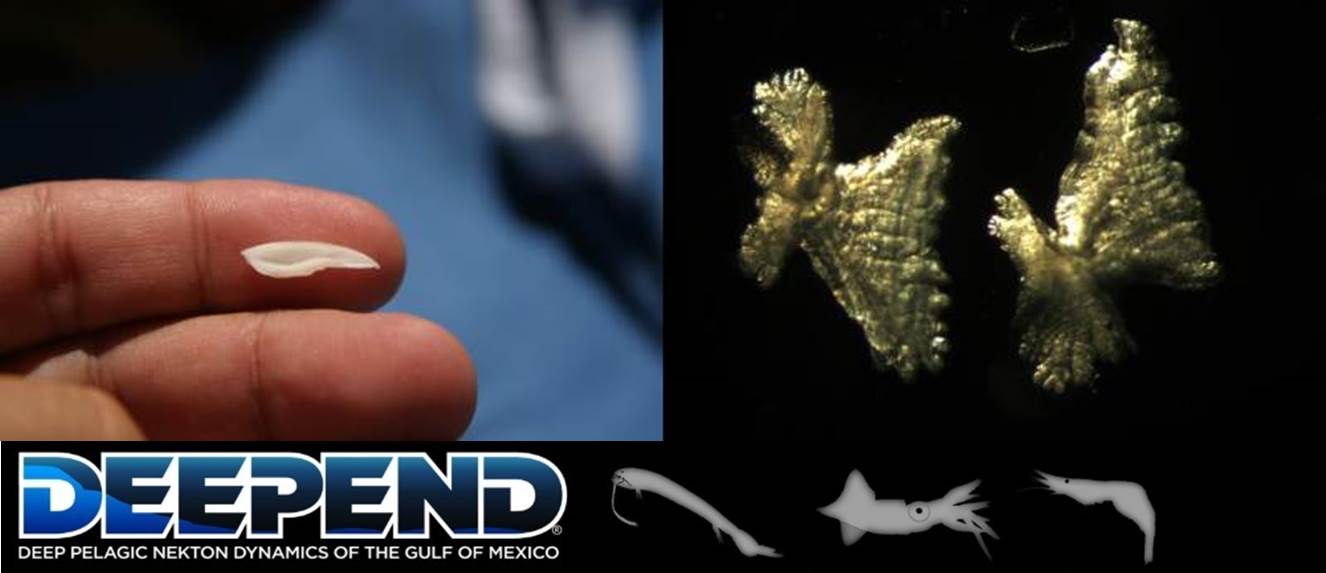
The degree of population connectivity for marine fishes is increasingly implicated as a key factor regulating population dynamics, and a variety of approaches have been used to assess movement and connectivity within and across ocean basins, including chemical markers in hard part such as otoliths (ear stones). The aim of this research component is to use natural, chemical markers in the otoliths of deep-pelagic taxa to assess ecological connectivity within the GoM. We will use two classes of chemical markers (trace elements, stable isotopes) to examine variation in chemical signatures of selected deep-pelagic taxa among distinct geographic locations in the northern GoM (NE, NC, NW regions). This research is based on the assumption that whole otolith chemistry represents a lifetime signature of environmental exposure for deep-pelagic taxa, and distinct spatial variation in otolith chemistry will be observed if dispersive histories or exchange of individuals from different within the GoM is limited. Our characterization of ecological connectivity of deep-pelagic fishes will contrast a series of "model" species with different life history and/or behavioral characteristics (e.g., vertical migration vs. no migration). Our working hypothesis is that some level of population exchange or mixing is expected within the GoM, with mixing more likely for migrating species that will be influenced to a greater degree by surface or subsurface currents within the basin.
Funding: GOMRI
Movement and stock structure of Atlantic blue marlin
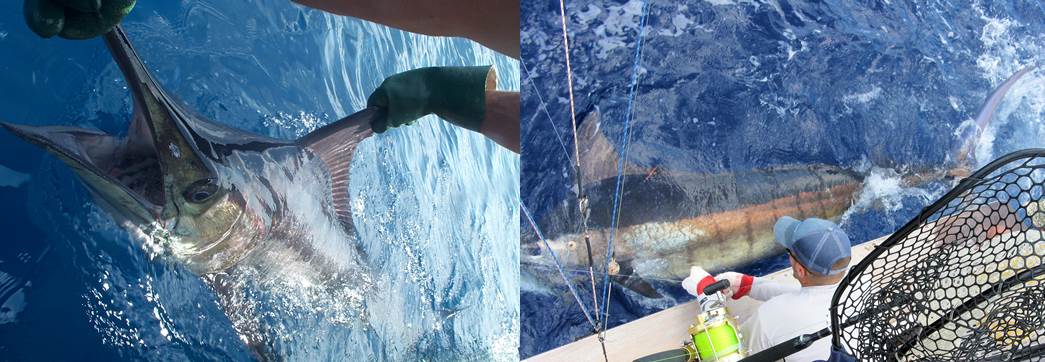
Atlantic blue marlin support highly valuable recreational and commercial fisheries through- out its range. Based upon approximately 50 years of mark recapture data, Atlantic blue marlin exhibit some of the longest movements ever recorded for oceanic fishes. To better understand intra-population variability in movements, we have been deploying pop-up archival tags on blue marlin in the Gulf of Mexico (GoM) since 2003. Long deployments (up to 1 year) reveal diverse movement patterns within the GoM. N to S seasonal changes in blue marlin distribution occur and show strong correspondence with established seasonal patterns of sea surface temperature and primary production. During the summer spawning season, blue marlin often utilize outer shelf and shelf edge waters in the northern GoM, and longer duration tracks indicated overwintering habitats in the Bay of Campeche. Although some egress occurs, our results indicate that a large fraction of the Atlantic blue marlin have a more restricted geographic range of habitats than previously recognized and that the GoM provides spatially dynamic suitable habitat that is utilized year-round through seasonal movements.
Funding: McDaniel Charitable Foundation
Associated Publications
Hoolihan JP, Luo J, Abascal FJ, Campana SE, De Metrio G, Dewar H, Domeier ML, Howey LA, Lutcavage ME, Musyl MK, Neilson JD, Orbesen ES, Prince ED, Rooker JR (2011) Evaluating post-release behaviour modification in large pelagic fishes deployed with pop-up satellite archival tags. ICES Journal of Marine Science 68(5): 880-889. doi:10.1093/icesjms/fsr024
Kraus RT, Wells RJD, Rooker JR (2011) Horizontal movement of Atlantic blue marlin (Makaira nigricans) in the Gulf of Mexico. Marine Biology 158: 699-713. doi:10.1007/s00227-010-1593-3
Vertical and horizontal habitat use of yellowfin tuna
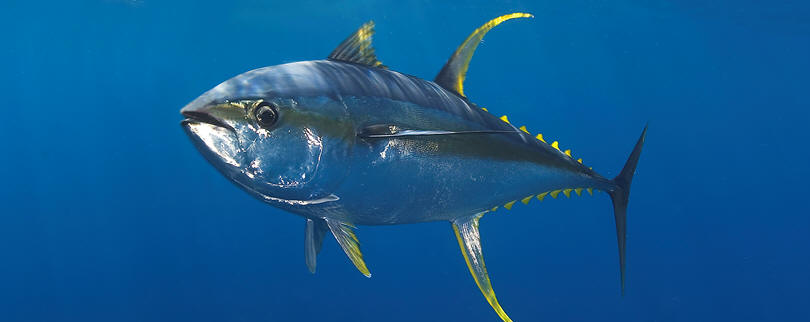
The aim of this project is to quantify movement and habitat use of yellowfin tuna in relation to large-scale oceanographic features in the Gulf of Mexico (Gulf). We are using pop-up archival transmitting (PAT) tag technology to provide detailed quantification of vertical and horizontal habitat use of yellowfin tuna in the northern Gulf. Our goal is to delineate essential habitat of yellowfin tuna and use these data to improve current CPUE standardization procedures for evaluating stock status. A total of 32 PAT tags were successfully deployed and horizontal movements were within the same area that tagging activities occurred. Average displacement distance (straight line distance from deployment to pop-off) was 151 km (n=32 fish) over the entire study period. The majority of time was spent at depths shallower than 80 m and at temperatures usually within ~8 C of surface layer temperature.
Funding: NOAA Cooperative Fisheries Research Program
Nursery origin of yellowfin and bigeye tuna in the Hawaiian Islands
Determining stock structure and defining the degree of stock heterogeneity or mixing is critical to the effective management of tropical tunas in the western and central Pacific Ocean (WCPO). The aim of this project is to determine the stock structure of bigeye and yellowfin tuna in WCPO using chemical tags in otoliths that are linked to ambient physicochemical conditions and dietary history. Work to date has shown the otolith chemistry of YOY yellowfin tuna from different areas of the WPCO is distinct, and can be used to determine an individual's nursery origin. Mixed-stock analysis suggests that a large fraction of the sub-adult yellowfin tuna collected from the nearshore Hawaiian Islands originated from this same area, highlighting the importance of local to the Hawaiian Island fishery for yellowfin tuna.
Funding: University of Hawaii-Pelagic Fisheries Research Program
Associated Publications
Wells RJD, Rooker JR, Itano DG (2012) Nursery origin of yellowfin tuna in the Hawaiian Islands. Marine Ecology Progress Series 461: 187–196. doi:10.3354/meps09833
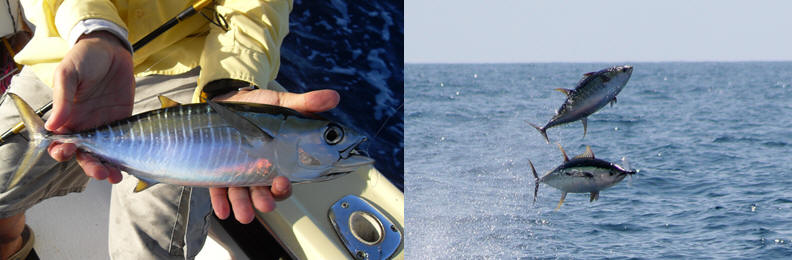
Distribution and habitat associations of billfish, swordfish, and tuna larvae across mesoscale oceanographic features
Our understanding of habitat use during the critical early life period limited even though larval indices are valuable for identifying spawning/nursery grounds and assessing population trends. In addition, it is well recognized that larval transport and/or survival varies as a function of time and location, and therefore determining spatio-temporal patterns of habitat use during early life as well as identifying the biological and physicochemical attributes of presumed nurseries are needed to define essential habitats of Atlantic billfish and swordfish populations. Since 2005, we have been conducting ichthyoplankton surveys in surface waters of the northern Gulf of Mexico (NGoM) to determine the relative value of this region as early life habitat of billfishes (blue marlin, white marlin, and sailfish) and swordfish. Work to date indicates that the distribution and abundance of billfish and swordfish larvae varies spatially and temporally, and several environmental variables (sea surface temperature, salinity, sea surface height, distance to the Loop Current, current velocity, water depth, and Sargassum biomass) are influential variables in generalized additive models (GAMs) developed for each species. Mesoscale features in the NGoM affected the distribution and abundance of billfish and swordfish larvae, with densities typically higher in frontal zones or areas proximal to the Loop Current. Habitat suitability of all four species is strongly linked to physicochemical attributes of the water masses they inhabit, and observed abundance and diversity are high in slope waters with lower sea surface temperature and higher salinity. Our results highlight the value of the NGoM as early life habitat of billfishes and swordfish, and represent valuable baseline data for evaluating anthropogenic effects (i.e., Deepwater Horizon oil spill) on the Atlantic billfish and swordfish populations.
Funding: NOAA Fisheries SEFSC, McDaniel Charitable Foundation, LSU, LDWF
Associated Publications
Cornic M, Rooker JR (2021) Temporal shifts in the abundance and preferred habitats of yellowfin and bigeye tuna larvae in the Gulf of Mexico. Journal of Marine Systems 217. doi:10.1016/j.jmarsys.2021.103524
Cornic M, Smith BL, Kitchens LL, Alvarado Bremer JR, Rooker JR (2018) Abundance and habitat associations of tuna larvae in the surface water of the Gulf of Mexico. Hydrobiologia 806: 29-46. doi:10.1007/s10750-017-3330-0
Cornic M, Rooker JR (2018) Influence of oceanographic conditions on the distribution and abundance of blackfin tuna (Thunnus atlanticus) larvae in the Gulf of Mexico. Fisheries Research 201: 1-10. doi:10.1016/j.fishres.2017.12.015
Kitchens LL, Rooker JR (2014) Habitat associations of dolphinfish in the Gulf of Mexico. Fisheries Oceanography 23(6): 460-471. doi:10.1111/fog.12081
Rooker JR, Simms JR, Wells RJD, Holt SA, Holt GJ, Graves JE, Furey NB (2012) Distribution and habitat associations of billfish and swordfish larvae across mesoscale features in the Gulf of Mexico. PLoS ONE 7(4): e34180. doi:10.1371/journal.pone.0034180