- Required Documents
- TWIC Card
- Merchant Mariner Card
- Medical Certificate
- Passport
- Student ID Card
- TSSOM Cadet Ship Operations Manual
- TSSOM Cadet Sea Term Agreement
- TSSOM Cadet Ship Ops Manual Appendix 1.
- TSSOM Cadet Ship Ops Manual Appendix 2.
- TSSOM Cadet Packing List
- TAMMA Student Rules
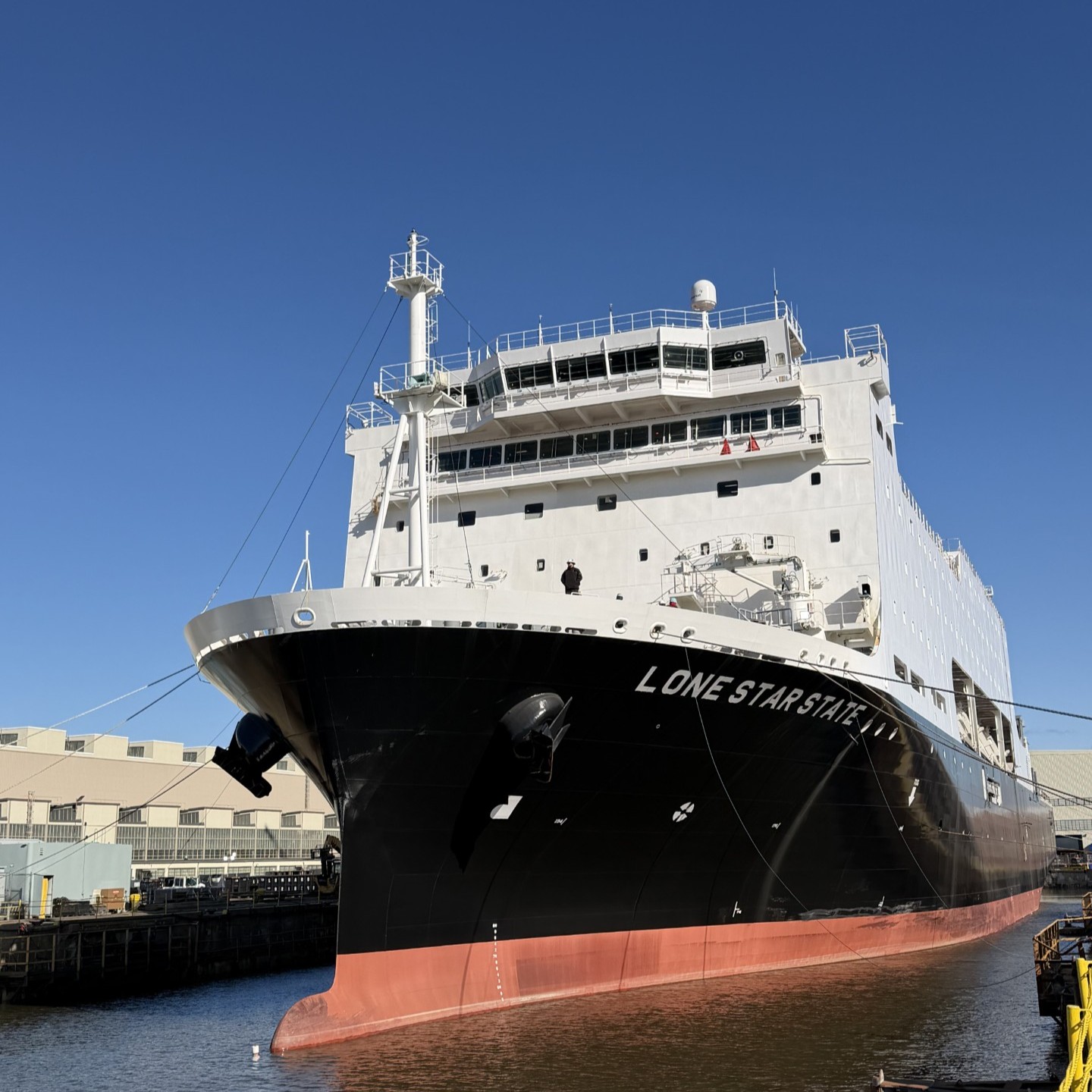
TS Lone Star State NSMV-4
Delivering Late Summer 2026
About the National Security Multi Mission Vessel program
About the TS Lone Star State
The TS Lone Star State is the fourth vessel in the U.S. Maritime Administration’s (MARAD) National Security Multi-Mission Vessel (NSMV) program.
Construction & Project Management
The NSMV program is managed by TOTE Services, acting as the Vessel Construction Manager, with the actual shipbuilding taking place at Hanwha Philly Shipyard (formerly Philly Shipyard) in Philadelphia, Pennsylvania.
Key Milestones & Timeline:
-
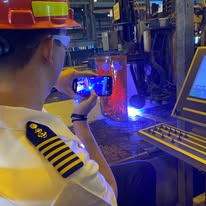
Steel Cutting: January 18, 2023
-
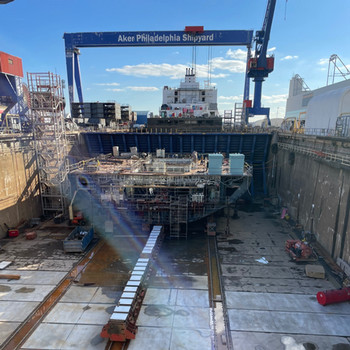
Keel Laying: December 6, 2023
-
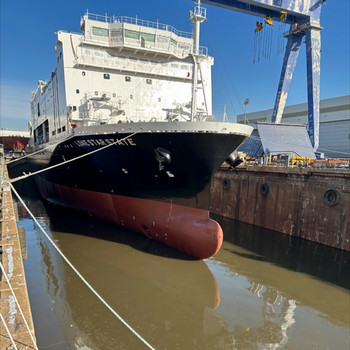
Vessel Launch / Float-Out: January 24, 2025
-
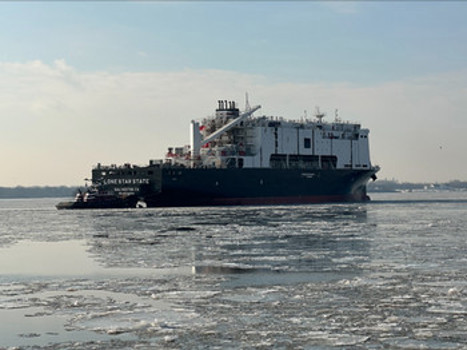
Current Phase: Outfitting, testing, and commissioning alongside the shipyard's outfitting docks.
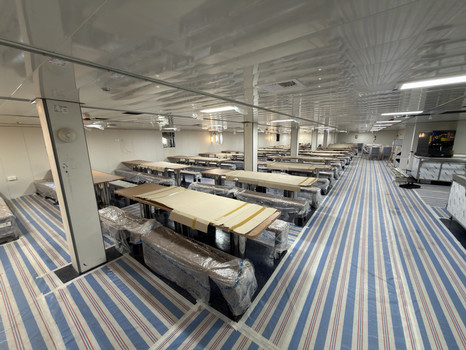
-
Expected Delivery: Late Summer 2026
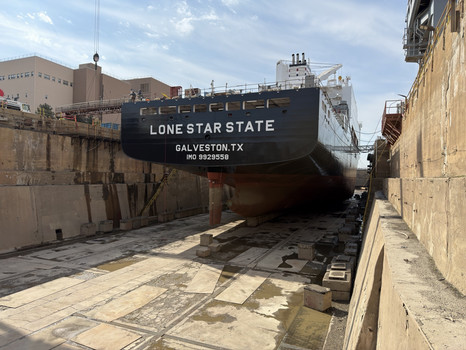
Vessel Capabilities & Specifications
The TS Lone Star State is designed to address a critical shortage of qualified U.S. mariners by replacing aging legacy ships with modern maritime technology.
-
Dimensions: 524 feet (159.85 meters) in length with an 88-foot 7-inch beam.
-
Training Facilities: Features high-tech instructional spaces, a modern full-scale training bridge, and the capacity to train up to 600 cadets at sea simultaneously (with a total vessel berthing capacity of 760).
-
Disaster Relief Features: When called upon for federal or state emergencies, the vessel is equipped with roll-on/roll-off (Ro-Ro) cargo ramps, a helicopter pad, modern medical/hospital facilities, and space for emergency provisions and first responders.
Current Status & Transition
Once delivered in late 2026, the TS Lone Star State will dramatically enhance the academy's maritime workforce training, reduce the exorbitant maintenance costs associated with operating legacy ships, and provide the Texas Division of Emergency Management (TDEM) with an advanced maritime asset for regional disaster response.